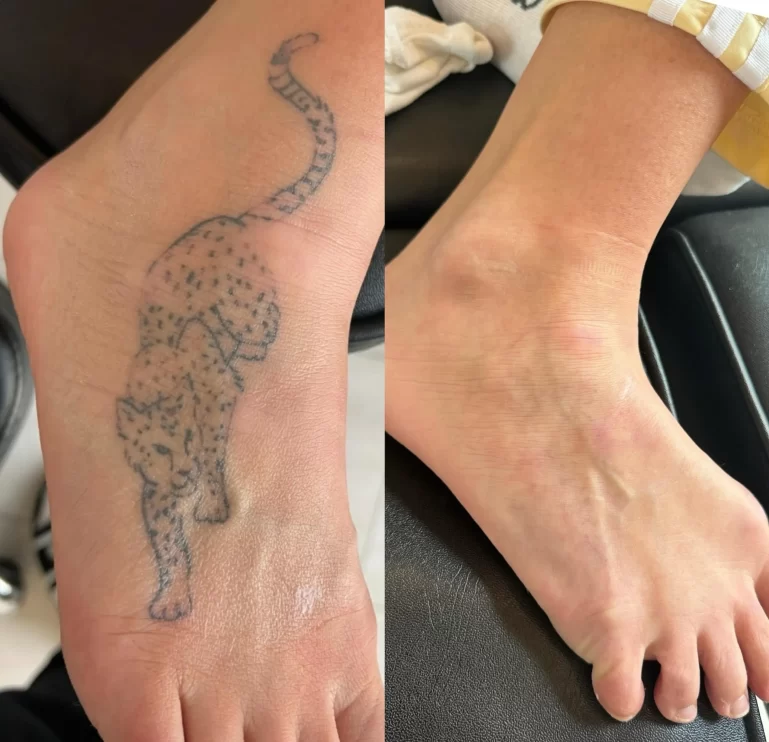
Ever stared at an old tattoo in the mirror and thought, “Does tattoo removal work 100%?” — you’re not alone. We get asked that question weekly in our Brisbane studio, especially from clients looking to fade old cosmetic tattoos or clean up body art that’s no longer serving them. And here’s the honest truth: tattoo removal can work really well, but 100% removal? That depends on a few key factors like your immune system, tattoo pigments and the laser technology used.
Contents
- 1 Why full removal isn’t guaranteed
- 2 How tattoo removal works
- 3 Factors that affect results
- 4 Real studio stories: What 100% looks like in practice
- 5 Healing after removal
- 6 How many sessions will you need?
- 7 Risks, side effects, and when to avoid removal
- 8 Aftercare checklist
- 9 Cosmetic tattoo removal vs body ink
- 10 What to look for in a provider
- 11 2025 Beauty Trend Note
- 12 Final thoughts
- 13 FAQ
Why full removal isn’t guaranteed
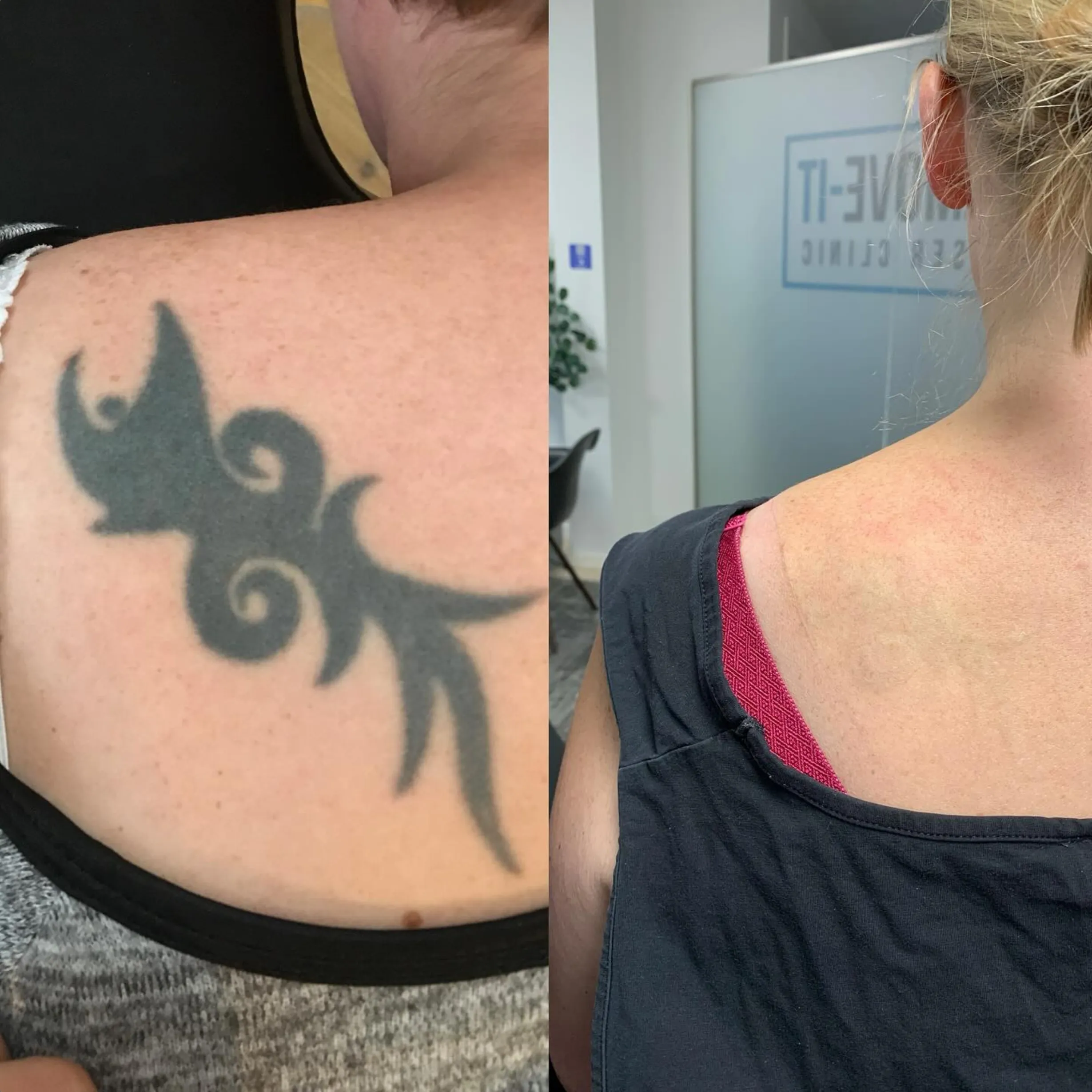
Before we get into laser treatments and timelines, let’s clear up one thing: the idea of a blank canvas after laser tattoo removal is often more myth than reality. Some tattoo ink colours are super stubborn, skin types respond differently, and even the laser system or treatment plan used matters.
We’ve seen some amazing results. We’ve faded eyebrow tattoos that turned blue over time, erased lip blush that healed too dark and softened old body ink to the point it’s barely visible.
But results vary — and it’s not about poor technique. It’s biology, tattoo depth, ink particles and your skin’s healing response all working together.
How tattoo removal works
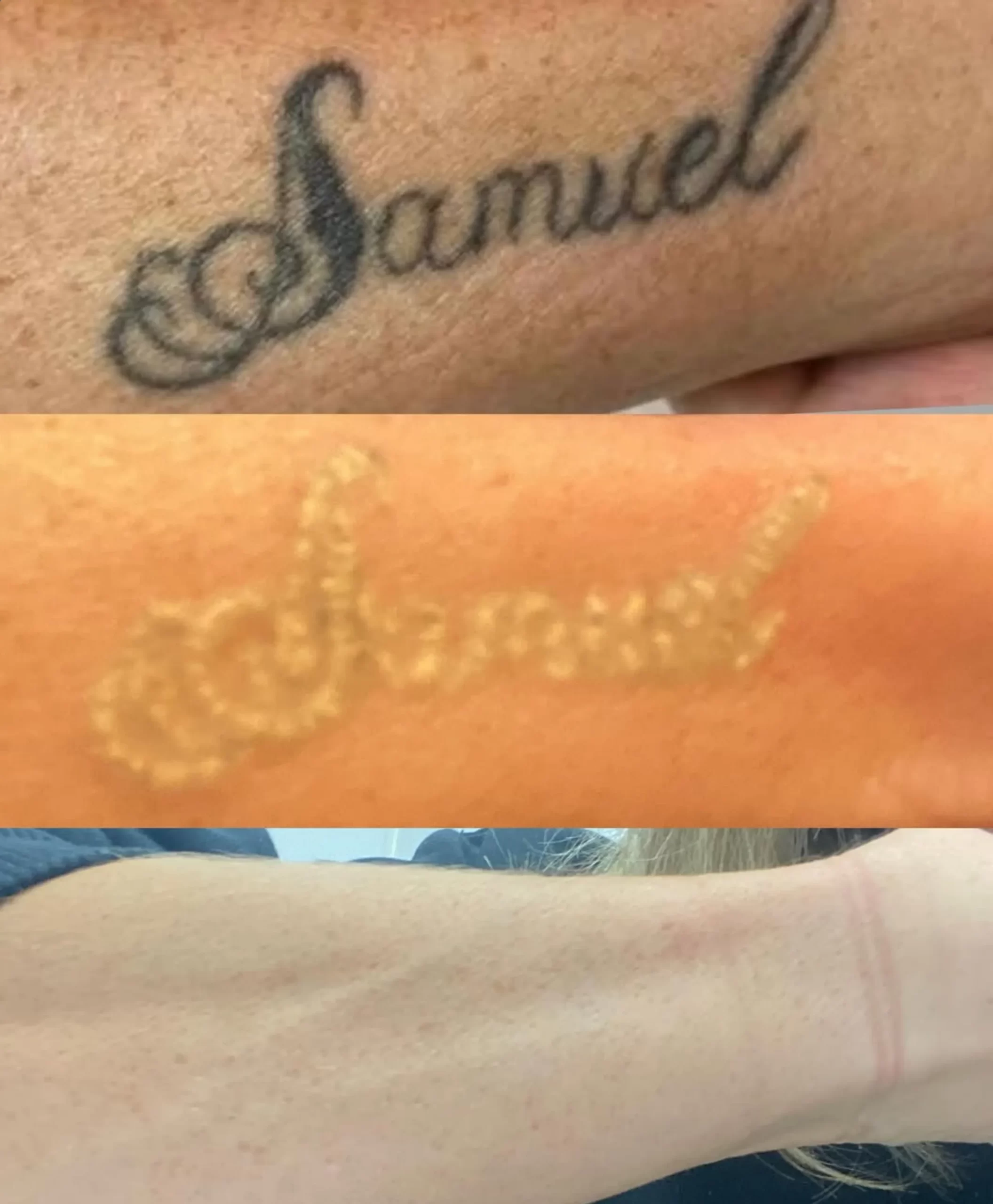
Tattoo removal isn’t magic — it’s science (and a bit of patience). Whether it’s laser removal, saline or surgical excision, the goal is to break up the tattoo pigments in the dermis so your immune system can flush them out over time using macrophagic processes.
Laser tattoo removal, especially with modern systems like PicoSure Laser, Q-switched lasers or Nd:YAG laser, uses precise laser light bursts to shatter pigment. Laser energy interacts with ink particles, breaking them down into smaller fragments for removal by the lymphatic system. The laser fluence, wavelength and beam all play a role in how effective each session is.
Saline tattoo removal, used for cosmetic tattoos like brows or lips, works by implanting a salt-based solution into the skin to draw pigment up and out. It’s gentler on delicate facial areas and is our preferred method for certain situations.
Surgical excision, rare, may be used for traumatic tattoo cases or when laser treatments aren’t viable.
Factors that affect results
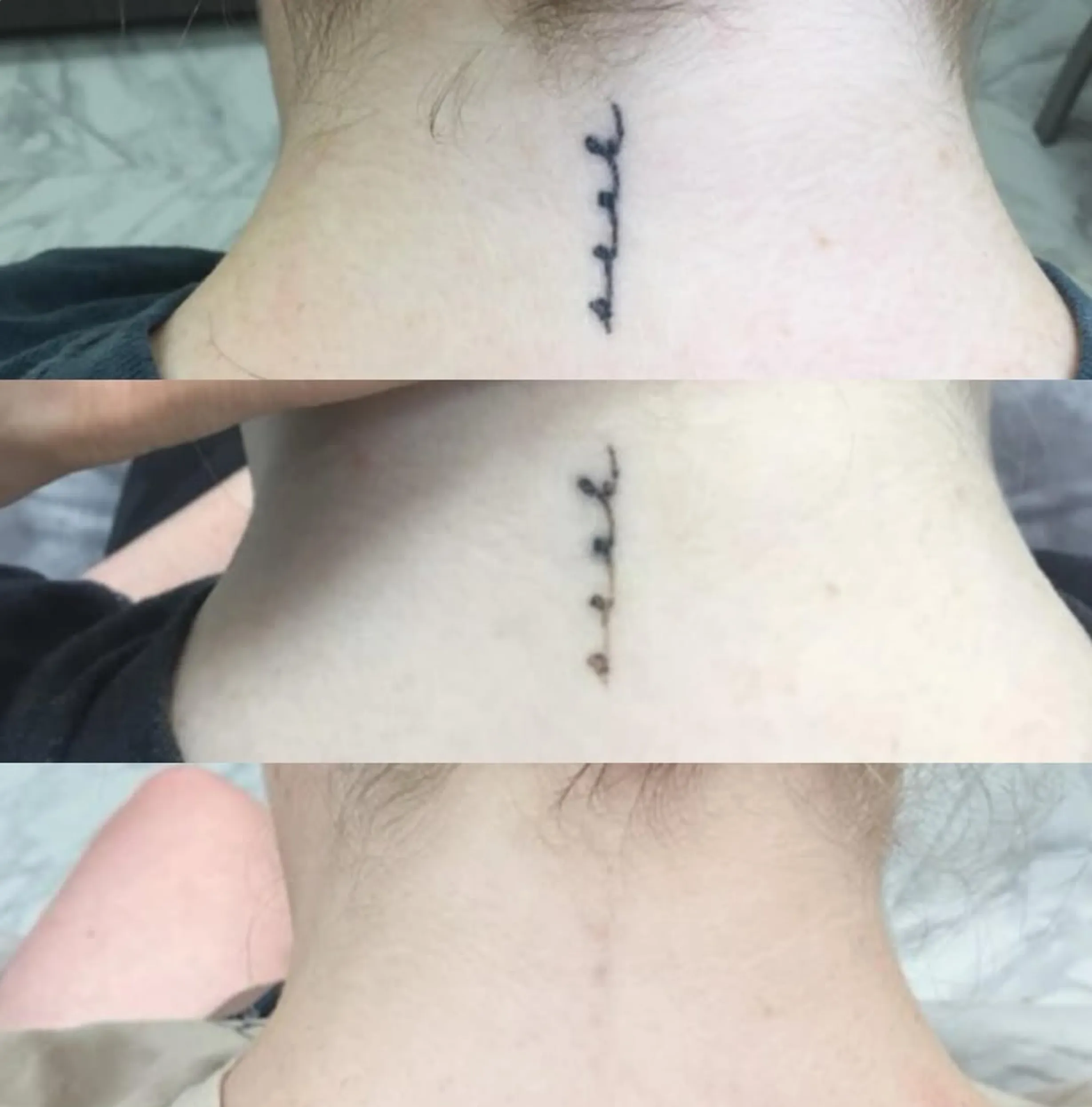
Not all tattoos are created equal, and neither are their removal journeys. Here are the biggest factors we consider when estimating your results:
- Ink colour: Black and dark blue respond best to laser. Yellow, red, green and colour tattoos can be more stubborn due to particle size and light propagation behaviour.
- Tattoo age: Older tattoos fade more easily than newer ink.
- Tattoo depth: Professional tattoos are placed deeper and denser than amateur or traumatic tattoos, and require more sessions.
- Skin type and condition: Fitzpatrick skin types IV-VI (darker tones) may need adjusted settings to avoid skin discoloration or irritation.
- Immune system: A strong immune response speeds up pigment breakdown and recovery time.
- Tattoo location: Areas with better circulation (like the face) heal faster than those on extremities.
- Removal method: Laser tattoo removal with the right device (Q-switch Laser, Pico laser, ultrapulse carbon dioxide laser) makes a big difference.
- Skin layers: Thicker or layered skin may require additional sessions.
Laser tattoo removal cost is another factor to consider — especially if you need multiple sessions. We always discuss costs upfront in your consult.
Real studio stories: What 100% looks like in practice
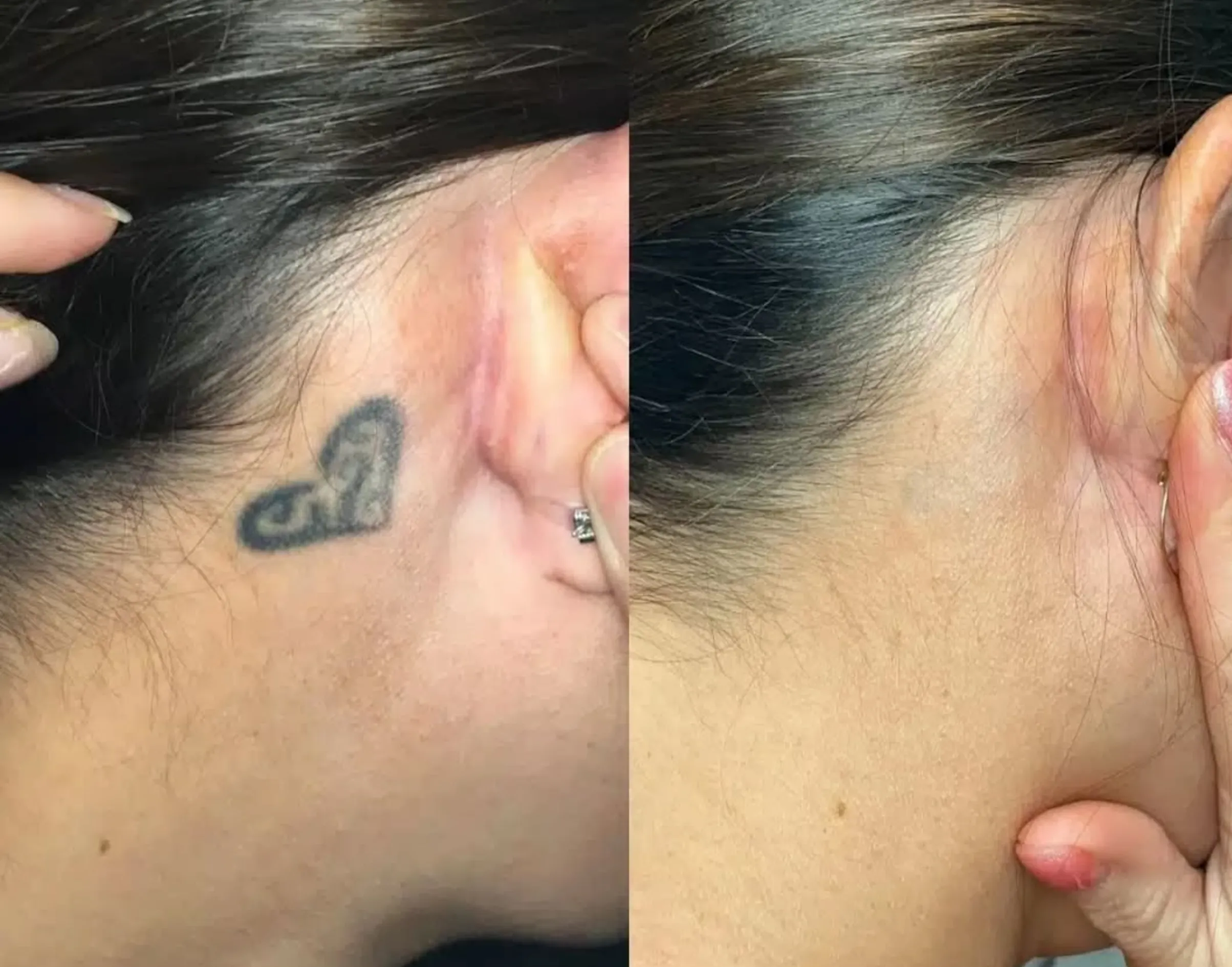
We had a client come in with bright red lip blush that had turned neon coral after 3 years. She wanted it gone. After 4 saline tattoo removal sessions spaced 8 weeks apart, we were able to fade it enough for a neutral tone correction — no more neon lips.
Another client had a microbladed brow that had healed ash-grey on her olive-toned skin. We used saline lightening over 3 sessions to lift enough pigment for a complete reshape and warm-tone correction.
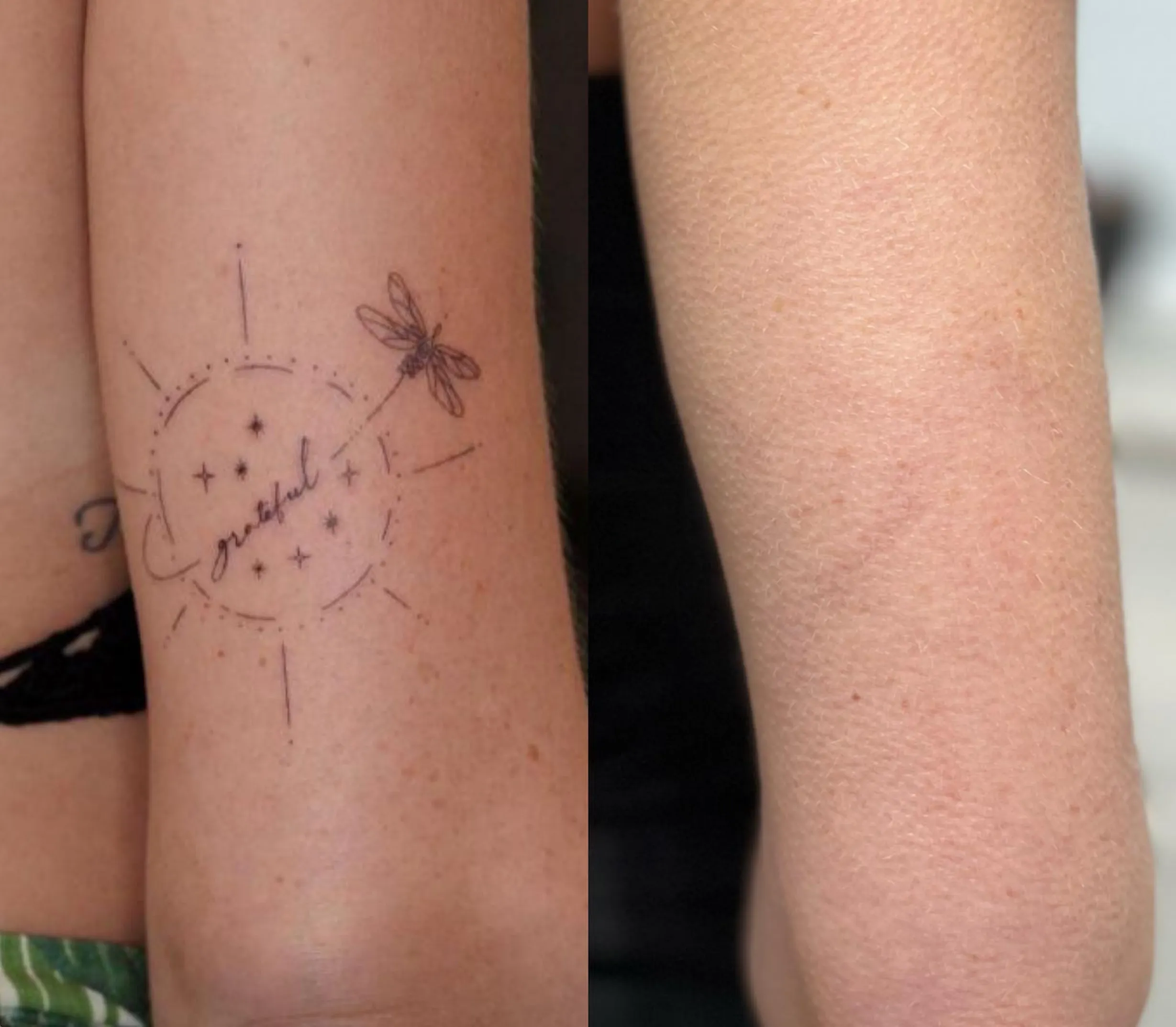
Were those results “100% removal”? Technically no. But to the naked eye and for the client’s goals, it was a complete transformation.
Healing after removal
Tattoo removal isn’t a one-and-done. Here’s a general healing timeline you can expect after a session:
| Week | What’s Happening |
|---|---|
| 1 | Redness, swelling, slight tenderness, possible skin irritation |
| 2 | Possible scabbing or flaking (don’t pick!) |
| 3-4 | Skin starts to settle; pigment gradually lightens |
| 5-6 | Deeper fading visible; skin integrity mostly restored |
| 6-8 | Time to assess progress and schedule the next session |
Each session builds on the last, and spacing them 6-8 weeks apart allows your immune system and skin condition to do their thing without being overwhelmed.
How many sessions will you need?
This varies wildly. Some small cosmetic tattoos may lift in 2-3 sessions. Deep body tattoos could take 8-12 or more. We always start with a consult to assess:
- The ink depth and quality
- Skin type, colour, and medical history
- Previous corrections or touch-ups
- Your goal: full removal vs lightening for a cover-up tattoo
We’d rather under-promise and over-deliver than say “you’ll be ink-free in 3 sessions” and have you disappointed.
If you’re specifically seeking eyebrow tattoo removal, we’ll let you know upfront how many saline or laser sessions may be needed and what fading outcomes you can realistically expect.
Risks, side effects, and when to avoid removal
We’re always upfront about what could go wrong — because informed clients make better healing choices.
Common side effects include:
- Redness, blistering or scabbing
- Skin discoloration like hyperpigmentation or hypopigmentation
- Temporary texture changes
- Skin irritation
- Mild discomfort (a bit like elastic band flicks)
Less common but possible:
- Infection (if post care instructions aren’t followed)
- Scarring (usually due to picking or too-aggressive laser fluence)
We may recommend waiting if you:
- Are pregnant or breastfeeding
- Have compromised immunity or active skin conditions
- Had recent sun exposure or chemical peels like trichloroacetic acid
Aftercare checklist
After each removal session, follow these steps religiously:
- Keep the area clean and dry for 48 hours
- Avoid makeup, exfoliants, tattoo removal creams or active ingredients
- Don’t pick, rub or scratch
- Apply healing balm if advised (we love zinc-based options)
- Avoid sun and heat (no saunas, workouts or tanning)
- Book your next treatment session only when fully healed
Following this post-care routine is essential for both laser tattoo removal and saline tattoo removal clients to avoid unnecessary complications.
Cosmetic tattoo removal vs body ink
We often get asked: “Is eyebrow tattoo removal harder than body ink?” And the answer is: not harder, just different. Brows, lips and eyeliner tattoos are more superficial but can be trickier due to colour and pigmentation differences. We use saline removal for these because it’s:
- Gentle on delicate facial tissue
- Effective on stubborn cosmetic tattoo pigments
- Less likely to trigger pigment darkening (a risk with laser removal on iron-oxide inks)
Body tattoos often use carbon-based or synthetic inks and sit deeper in the dermis. Laser technology is better suited here for precision targeting, especially with tools like Picosecond lasers, Q-switched Nd: YAG laser, or carbon dioxide lasers.
What to look for in a provider
Not all clinics are equal. In Brisbane, look for a provider who:
- Is trained in both laser and saline methods
- Offers tailored treatment plans for your skin type
- Uses reputable laser systems (like PicoSure Laser, Nd:YAG laser, or Q-switch Laser)
- Explains side effects and provides clear post care instructions
- Doesn’t promise unrealistic results or quote without a full consult
Choosing a qualified provider is one of the most important decisions you can make when planning tattoo removal.
We’ve had clients come in after botched removal at a tattoo parlor or by non-medical professionals — think blue brows, over-lasered lips, or skin burns. Always ask about the tattoo artist or technician’s qualifications.
2025 Beauty Trend Note
We’re seeing a shift in 2025. Instead of full removal, many clients want to lighten tattoos just enough for a cover-up tattoo — like reworking old eyeliner or reshaping lip blush.
Laser tattoo removal has become more affordable, and combined treatment plans (fading + re-tattoo) are now common. We love seeing creative outcomes when clients reclaim their ink story.
Final thoughts
So, does tattoo removal work 100%? Not always. But it can work enough — to restore your confidence, give you a fresh start, or make room for something better.
In our Face Figurati Cosmetic Tattoo Studio in Brisbane , we approach every tattoo removal with honesty, skill and skin safety in mind. Whether you’re fixing a faded cosmetic tattoo or saying goodbye to that teenage decision, we’ll help you get the best outcome your skin can achieve.
FAQ
Can you guarantee 100% tattoo removal?
No honest provider will. Results depend on tattoo ink, your immune system and other factors.
Does tattoo removal hurt?
It can sting, like hot elastic band flicks. Some clients with a lower pain threshold may need numbing cream or cooling aids.
How much does tattoo removal cost in Brisbane?
It varies. For a tattoo the size of a business card, prices range $100–$500+ per session, depending on method and number of sessions. We always provide full transparency about laser tattoo removal price during your initial consult.
What’s better: laser or saline tattoo removal?
Laser removal is best for body tattoos. Saline is preferred for cosmetic tattoos. In some cases, we combine both.
Can I get a new tattoo over the area after removal?
Yes — once fully healed. Many clients fade tattoos to make space for better artwork or updated cosmetic procedures.
